3D printed pattern casting method is very useful for making prototype and small batch casting production. We can use 3D pattern printer to produce cast iron and cast steel castings.
This integrated process greatly cuts production cycles, eliminates costly custom tooling, and unlocks complex geometric structures impossible for traditional pattern making.
Our dedicated 3D printing workstation supports large-format pattern manufacturing, with a build envelope of 1.8 meters in length, 1.2 meters in width and 0.7 meters in height. Such a generous working space allows us to fabricate full-size patterns for medium-to-large casting parts.
A major strength of this technique lies in its broad material compatibility. We can produce qualified castings from four mainstream metal alloys: ductile iron (nodular cast iron), grey cast iron, carbon cast steel, and stainless steel. Each material meets standard industrial mechanical requirements, covering applications from machinery bases and pump housings to corrosion-resistant structural components.
Although the casting surface quality is not as good as castings made by shell molding process, compared with conventional green sand castings, 3D printed patterns deliver higher precision and flexible iteration. Design revisions only require modified digital files, avoiding weeks of rework on physical tooling.
For prototype verification and small-batch customized castings, this method balances cost efficiency and production speed perfectly. As digital manufacturing advances, 3D printed pattern casting will continue to upgrade traditional foundries with greater agility and wider alloy adaptability.
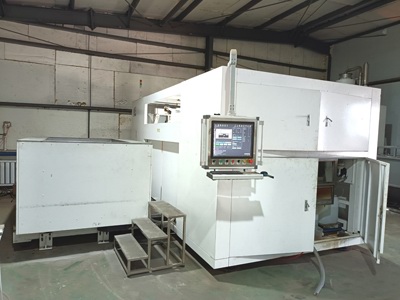
Foundry 3D Pattern Printer / Metal 3D Printer
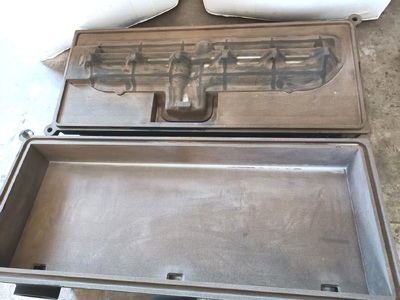
Pattern / Mold Made by 3D Printer
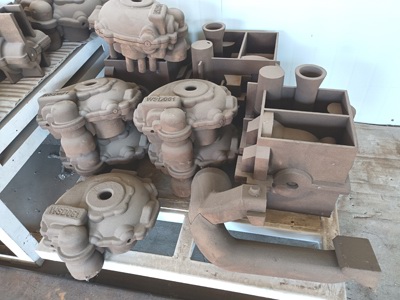
Pattern / Mold Made by 3D Printer
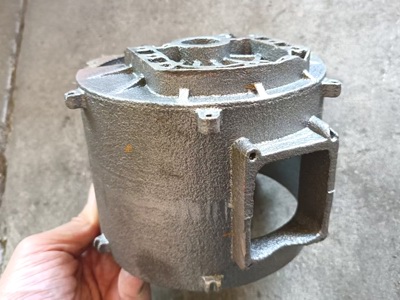
Metal Casting Made by 3D Printed Pattern |








